May 25, 2026


Living Abroad vs. the Constant Traveler
Interested in an international role, but not sure whether to live abroad or take on a role with constant travel? I’ve worked both: moved abroad for work, and have had global jobs from my home base with international responsibilities. There are pros and cons to both; you need to determine which is right for you.
.png)
When you want an international career, you need to decide whether to relocate abroad or be a regular traveler. Naturally, there are pros and cons to both.
Constant traveling takes its toll on your body and your family but doesn’t involve the upheaval of an international move. You don’t have to worry about selling, buying, or renting a home. You won’t have to go through the angst of what to pack, what to store – and, yes, what to throw out. You won’t have to worry about whether your household goods will arrive at their destination, or about setting up a house in an unfamiliar location that might not have your accustomed appliances or groceries. You will see your friends whenever you are home, and if you can manage your international travel schedule, you probably won’t have to miss weddings, funerals, and other big events.
However, when you’re visiting another country, you won’t experience the change as revolutionary as living abroad. As a professional, you will likely be judged as an outsider–but one who has made the decision to live locally. If you have a global role, you won’t be expected to have local expertise. Your role is to bring big-picture solutions, not market-specific plans that solve local problems. You will be perceived as an expert from HQ, someone to be respected and listened to, though perhaps not always welcomed or trusted because “you don’t live here, and you don’t get it.”
For many professionals, having an international career while working from their home country is the optimal choice. For some, their careers took off this way, and although they may have been offered the opportunity to move overseas, they declined for personal reasons. Moving yourself – and potentially your family – abroad is a huge decision. Some don’t want to give up a seat so close to decision-making power, viewing their proximity to headquarters (HQ) as a better position for their advancement. This can certainly be true. However, many times the only way a new manager can acquire international skills is to take the risk and move abroad. I’m outlining the pros and cons of each from my own experience and research with thousands of global professionals.
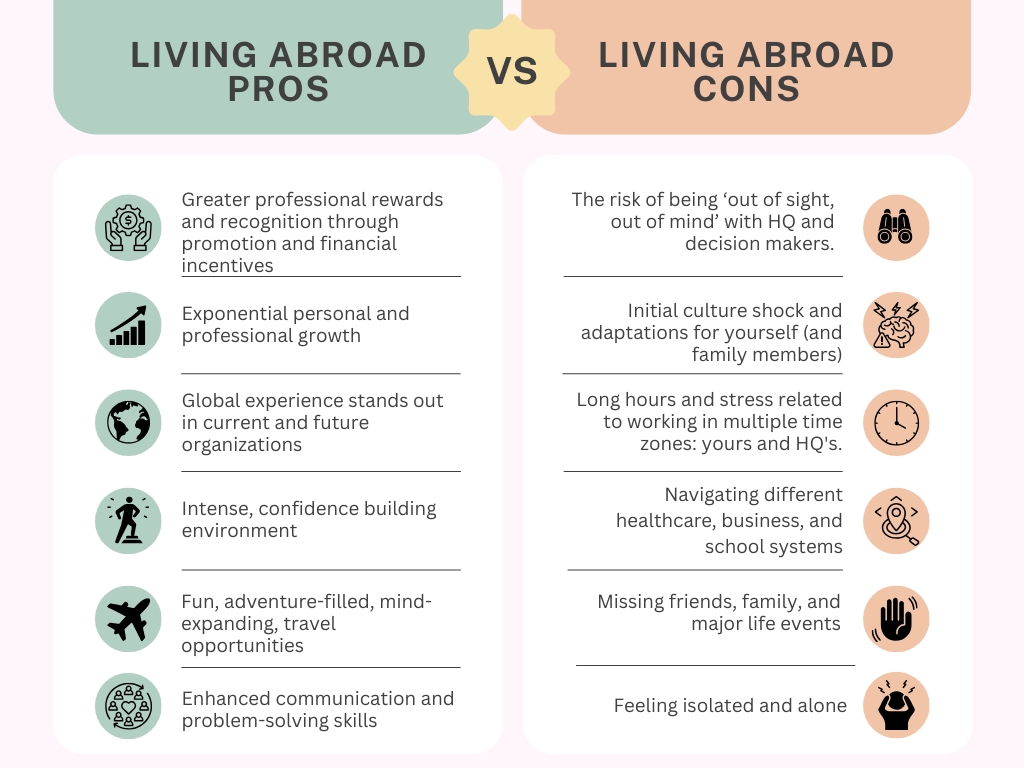
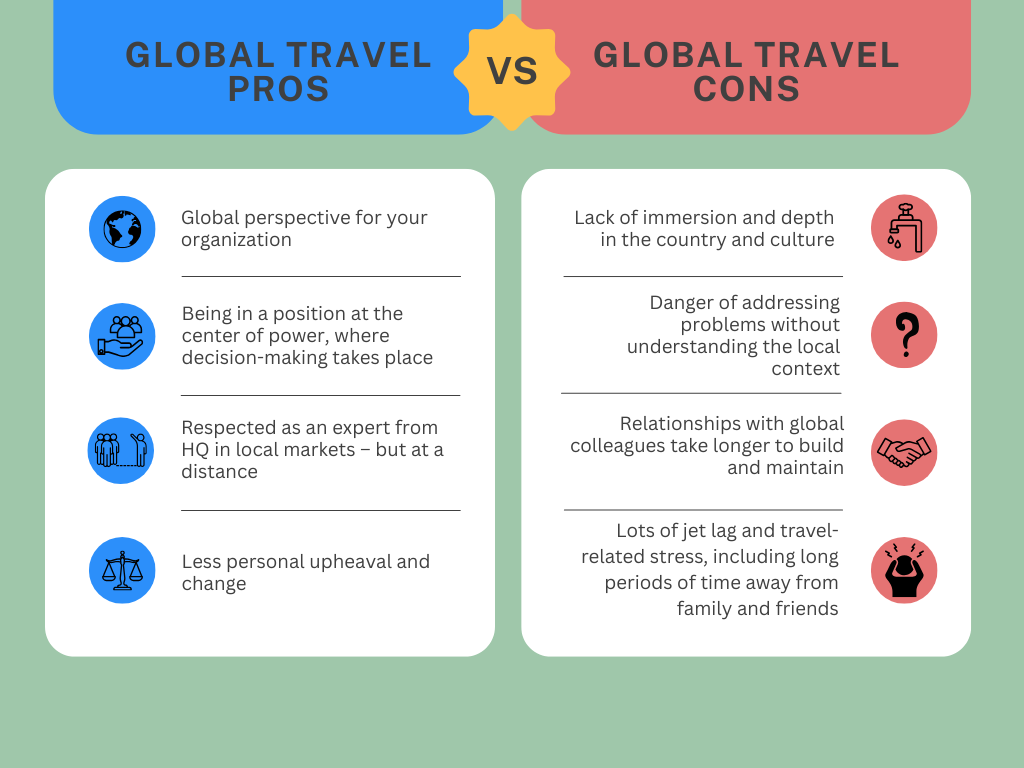
Overall, the vast majority of women and human resource executives I interviewed agree that although you can usually do your job effectively while traveling in and out of countries, you miss the deep dive if you don’t go overseas for at least a portion of your career. Global professionals tend to work and live abroad for at least three years and, if possible, return to an international or global position as their next move.
For more tips about relocating abroad for work, check out Get Ahead By Going Abroad. To hear from global gurus how international travel advanced their careers, follow the Open Mindset Project and LinkedIn.
Recent Posts


April 5, 2026
Friendship Across Cultures

March 31, 2026
Importance of Raising Global Children
.png)
March 8, 2026
Women Move Up By Moving Overseas
Trusted Worldwide






.png)
.png)
.png)
.png)

.png)
.png)
.png)
.png)