May 25, 2026


A Winter’s Tale -- of Three Cities
Consider the unique appeal of visiting Vienna, Prague, and Berlin in winter, when rich cultural offerings, festive Christmas markets, and thinner crowds make Europe’s great capitals especially rewarding. Read on for an evocative overview of each city’s history, major attractions, seasonal experiences, and culinary specialties to help travelers plan an unforgettable cold-weather itinerary.
.jpg)
by Marshall S. Berdan
The arrival of winter in Central Europe brings with it cold temperatures, reduced daylight, and the cessation of most outdoor activities. But it also has its seasonal advantages, most notably a full schedule of premier cultural activities, significantly reduced crowds at must-see attractions, and greater opportunities to interact with the locals. And for those traveling in December, there is the added bonus of traditional outdoor Christmas markets, replete with their own charmingly distinctive shopping, dining, and drinking experiences. (Despite the name, Christmas markets generally last through New Year’s.)
With little going on in the countryside anyway, winter is by default best suited for major cities, especially those with an abundance of world-class museums, palaces, and cultural venues. Less than 500 miles separate three of central Europe’s most compelling and evocative urban destinations, each laden with centuries of history and layers of charm, and each now the capital of its own historically distinctive country: Fin-de-siecle Vienna, Baroque Prague, and post-WWII Berlin. Each is well worth four or five days and its own trip, but ambitious travelers can string all three together easily by train, bus, or rental car for a truly capital, winter wonder trip.
VIENNA
Overview: From the late 1200s until the end of WWI, Vienna (Wien) was the center and capital of the increasingly vast (and wealthy) Habsburg Empire. The “modern” city came into being with the demolition of the medieval city walls in the mid-1850s, thus allowing for a civic building boom in the grand Historicism style along the wide, new, semi-circular Ringstrasse. Significantly damaged during WWII, Vienna was restored to its fin-de-siecle grandeur in the 1950s. With its hereditary devotion to the arts, especially music and ballroom dancing (think Strauss, Mozart, and Beethoven), gracious living, and café culture, Vienna is arguably Europe’s most refined and cultured metropolis.
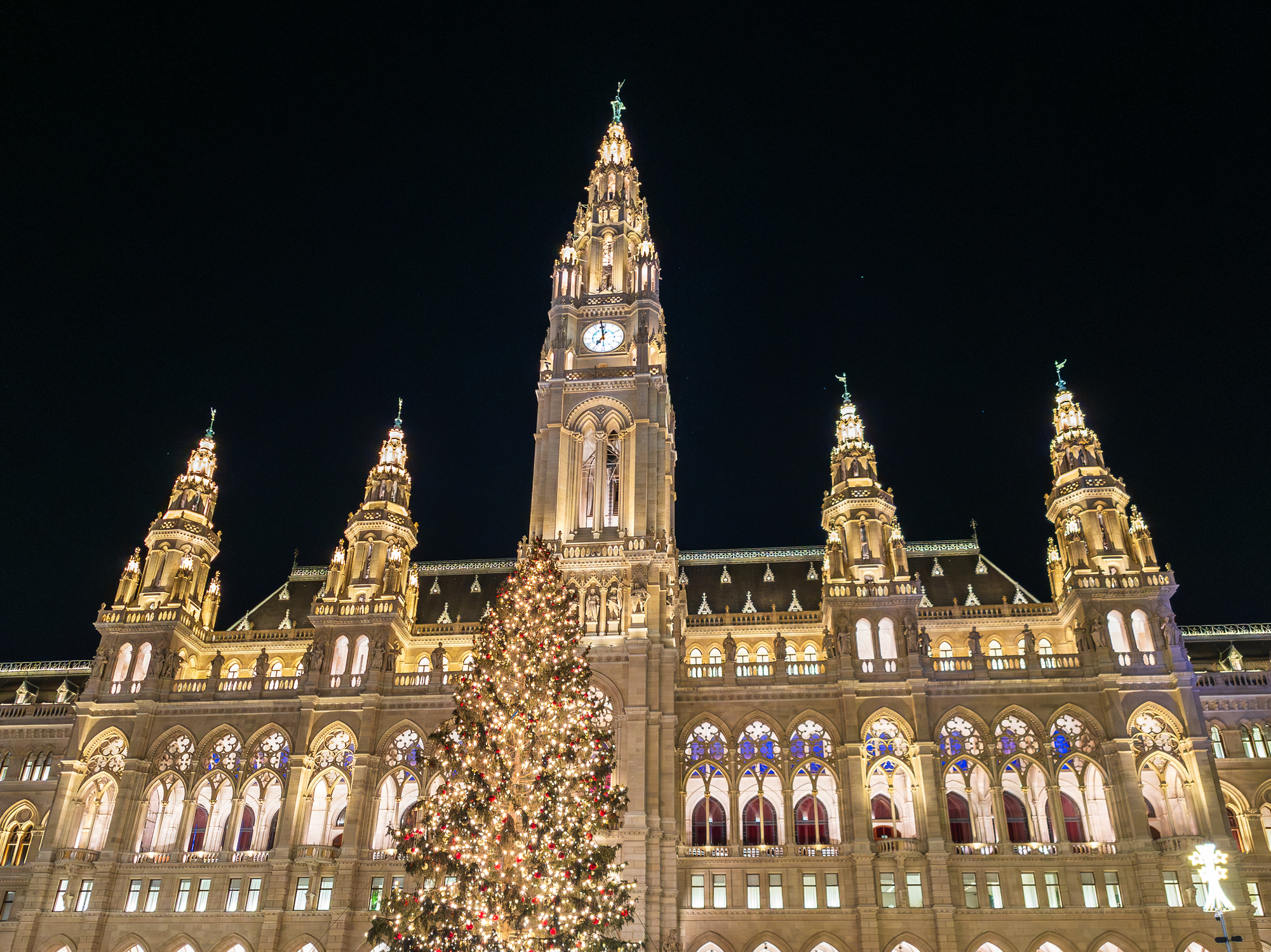
Major Attractions: The Hofburg, the vast and imposing imperial court of the Habsburgs with its opulent state rooms, residential suites, and over-the-top Treasury; Schonbrunn, their equally opulent suburban summer palace and gardens; expansive Museum of the History of Art, more contemporary-oriented Albertina, and the Secession Movement (e.g., Gustav Klimt) Leopold Museum Gothic St. Stephen’s Church, the center of Vienna’s now commercial medieval heart; and the houses of two legendary Viennese (albeit for widely different things), Wolfgang Mozart and Sigmund Freud.
Cultural Opportunities: Attend a performance at the State Opera House or watch it streamed live on a screen outside; take in one of dozens of daily classical musical concerts at secondary venues; observe morning training or a weekend performance of the prancing Lipizzaner stallions at the Spanish Riding School.
Food and Drink: Enjoy coffee and strudel at a traditional coffeehouse or Sachertorte at the upscale Sacher Café; tuck into a giant weinerschnitzel at a neighborhood Wirtshaus; or drink in the atmosphere and fruit of local vines at a suburban Heuriger (wine tavern).
Holiday Experiences: The expansive Wiener Christkindlmarkt in the Rathausplatz features a large stage and a “lazy river” skating pond. More traditional options include the markets at Schonbrunn and Belvedere Palaces, around St. Stephen’s Church, and the action-oriented Wintermarkt at Prater Park, home of the giant Ferris wheel, which will be spinning. Other things to do: take in a Christmas concert at any of several opulent churches or take waltzing lessons in preparation for a New Year’s Eve Ball.
PRAGUE
Overview: Before passing into the industrious hands of the Austrian Habsburgs in 1526, hill-engirded Prague (Praha) served as the capital of the Kingdom of Bohemia and the home of Holy Roman Emperor Charles IV (1355-78), who built and spent lavishly here. When the Austro-Hungarian Empire was abolished in 1918, Prague became the capital of the new composite nation of Czechoslovakia. Occupied, but not damaged, by the Nazis in WWII, it fell to and then suffered under Russian Communist domination afterwards. Czechoslovakia achieved autonomy in 1989, only to split into two countries in 1993. Since 2016, the country has been referred to as both the Czech Republic (formal) and Czechia (informal). Largely unchanged architecturally since the 1700s, it doesn’t get any more Old-World charming than the “City of a Hundred Spires.”
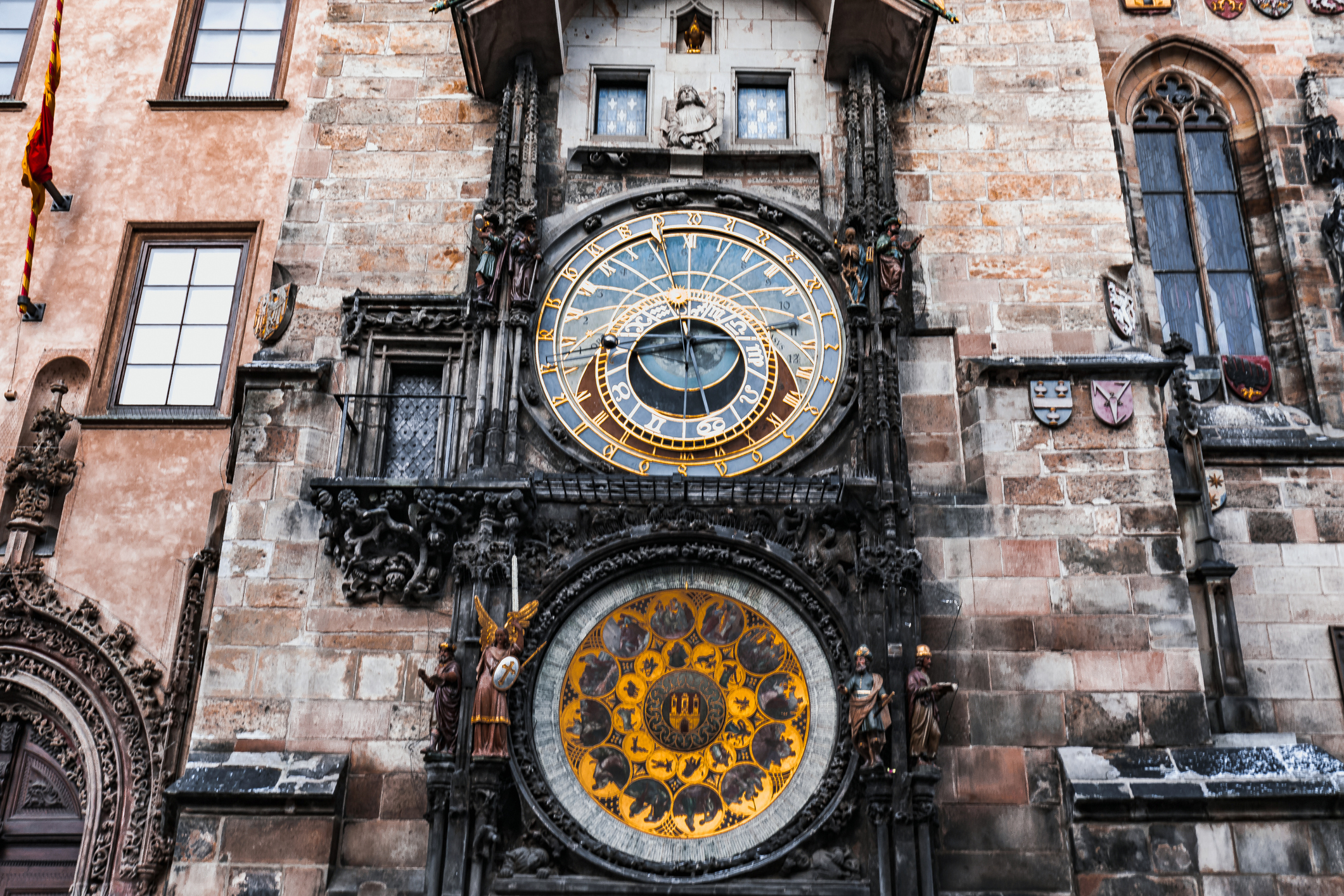
Major Attractions: Prague Castle, including towering St. Vitus’ Cathedral, the old Royal Palace, and picturesque Golden Lane all perched atop the hill above quaint Mala Strana (Little Quarter) on the west bank of the Vltava; the statuary-guarded pedestrian Charles Bridge; Sternberg Palace, home of the National Gallery; quintessentially medieval Old Town Square with its iconic 14th-century Town Hall and astronomical clock, and towering fairy-tale like Church of Our Lady before Tyn; Josefov (Jewish Quarter) featuring Europe’s oldest synagogue; and the 19th-century commercial New Town.
Cultural Opportunities: Attend a professional orchestral performance at the Neo-Renaissance Rudolfinum and National Theater, Art Nouveau Municipal House, and Baroque Dvorak Museum, or any number of smaller nightly concerts at landmark churches or synagogues; enjoy suspended animation at the National Marionette Theater.
Food and drink: Enjoy Czech pilsner at a traditional beer hall or garden; settle into a cozy pub for hearty winter fare such as duck and roast pork with dumplings; sample the kolach and other delectable offerings at a local pekarna (bakery); treat yourself to a trdelnik (chimney cake) from a street vendor.
Holiday Experiences: Prague’s grandest and most popular Christmas Market takes place in the quintessentially atmospheric Old Town Square. Only slightly less evocative is the one at Prague Castle. For a calmer, more local experience, head to Peace or Tyl’s Square. Other holiday treats include a choir performance at St. Nicholas Church and a Christmas lights cruise on the Vltava.
BERLIN
Overview: Prior to German unification in 1871, low-laying and low-slung Berlin was the capital of the militaristic Kingdom of Prussia, ruled most famously and effectively by Frederick the Great (1740-1786). Under Bismarck and two Kaisers, both named Wilhelm, it became not only the new nation’s capital, but also its commercial, cultural, and hedonistic center before being commandeered by the Nazis in 1933. Largely destroyed in WWII, Berlin was stripped of its capital city status and divided politically by the victorious Allies, a division that became even starker with the construction of the notorious Berlin Wall in 1961. In 1991, the newly wall-less Berlin was restored as the capital of a united Germany, with former desolate and derelict Communist East Berlin, currently in the midst of a colossal building boom, once again its heart and soul.
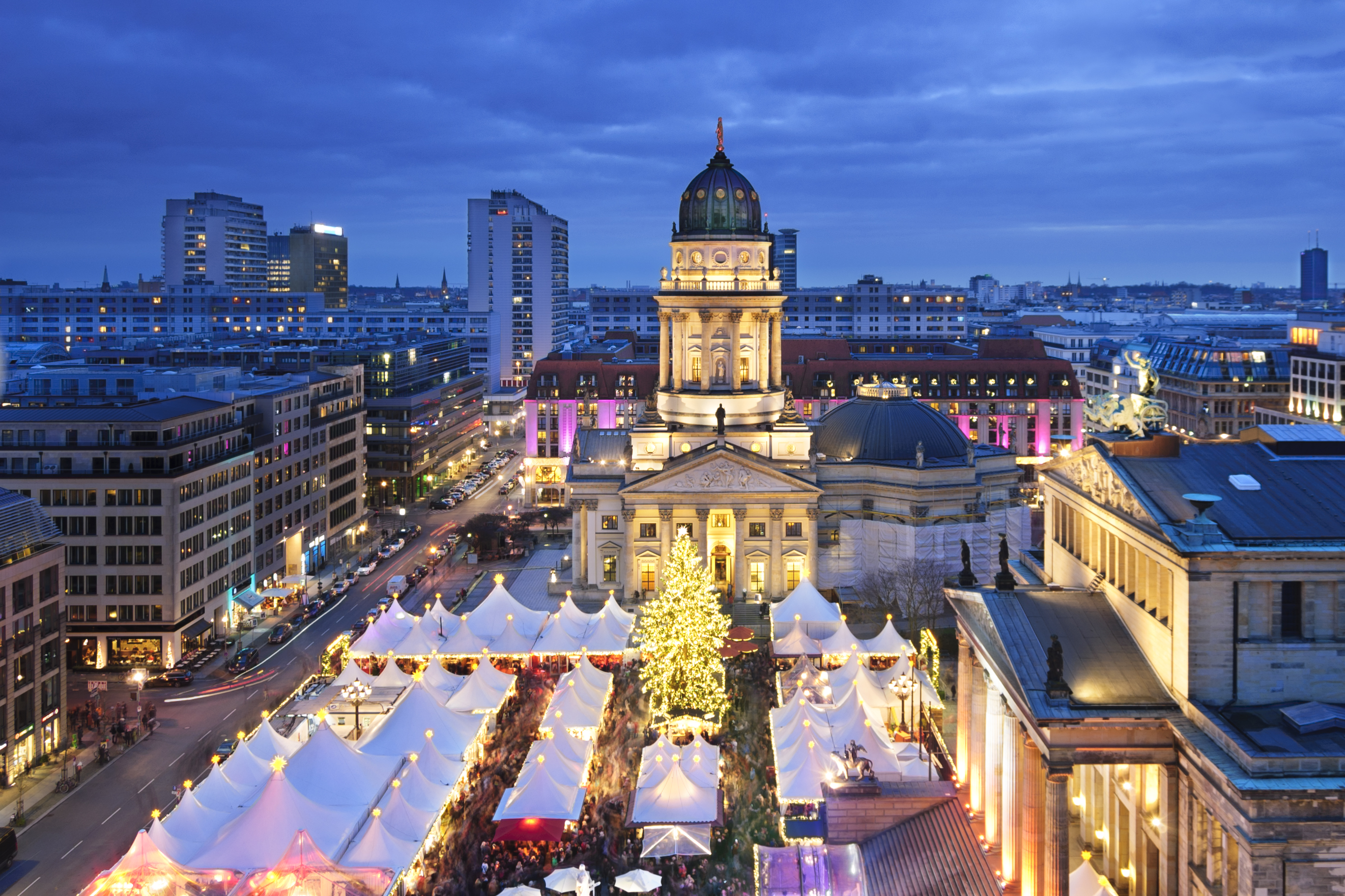
Cultural Attractions: Museum Island, especially the Altes and Neues (home of the bust of Nefertiti), and the German History Museum (the Pergamon is closed through 2027); the ornate Protestant Berliner Dom; the Gemaldegalerie art museum of European masterpieces; Brandenburg Gate; and the sumptuous Baroque palaces (Sanssouci and the Neues Palais) of Frederick the Great in nearby Potsdam.
War and Post-War Attractions: The restored Reichstag (Parliament) with its climbable glass cupola; dramatic ruins of Kaiser Wilhelm Memorial Church; Checkpoint Charlie (reconstruction and adjacent museum); the open-air Topography of Terror exhibit on the site of Gestapo headquarters; the moving Memorial to the Murdered Jews of Europe; and the Berlin Wall Memorial in Prenzlauerberg.
Food and Drink: Sample local favorites bulette, currywurst, and doner kebabs at any number of street stands; tuck into a warm pfannkuchen jelly donut (a.k.a. ein Berliner) at a neighborhood backerei; ogle the wares at Fassbender & Rausch, the world’s largest chocolate shop; and naturlich, sit back and savor the suds and pretzels at an indoor beergarten.
Holiday Experiences: Among the more enticing of Berlin’s 100+ Christmas Markets are the ones at Charlottenburg Palace, Breitscheidplatz (Kaiser Wilhelm Memorial Church), Humboldt Forum, Alexanderplatz, and especially the Gendarmenmarkt. Other holiday treats include the lights and displays along the Kurfurstendamm, Advent concerts, ice-skating at the Forest-Winterlights exhibit, and gazing out over the city from atop the Fernsehturm (TV Tower).
(Based on “A Capital Trio: Vienna, Prague and Berlin offer tourists history and charm,” which appeared in Newsday on March 19th, 2017)
Recent Posts


April 5, 2026
Friendship Across Cultures

March 31, 2026
Importance of Raising Global Children
.png)
March 8, 2026
Women Move Up By Moving Overseas
Trusted Worldwide






.png)
.png)
.png)
.png)

.png)
.png)
.png)
.png)